Sunday, 19 January 2020

Cork - Part 1 - experiencing the city

Ireland’s second largest city is first in every important respect - at least according to the locals who cheerfully refer to it as the ‘real capital of Ireland’!  I have to admit, by this point in my travels I actually was wishing I wasn’t going to Cork - after having spent so much time in smaller, more rural communities I wasn’t sure I wanted the hustle and bustle and energy level of a big city again...but I’m so glad I went!  I loved Cork!!
Because there’s so much to say and see about Cork I’m going to break it into two blog posts.  In this one I’ll give you some history and information about the city and photos that are more ‘general’ from when I was walking around and exploring.  In a second blog post I’ll focus more on some specific attractions in Cork.

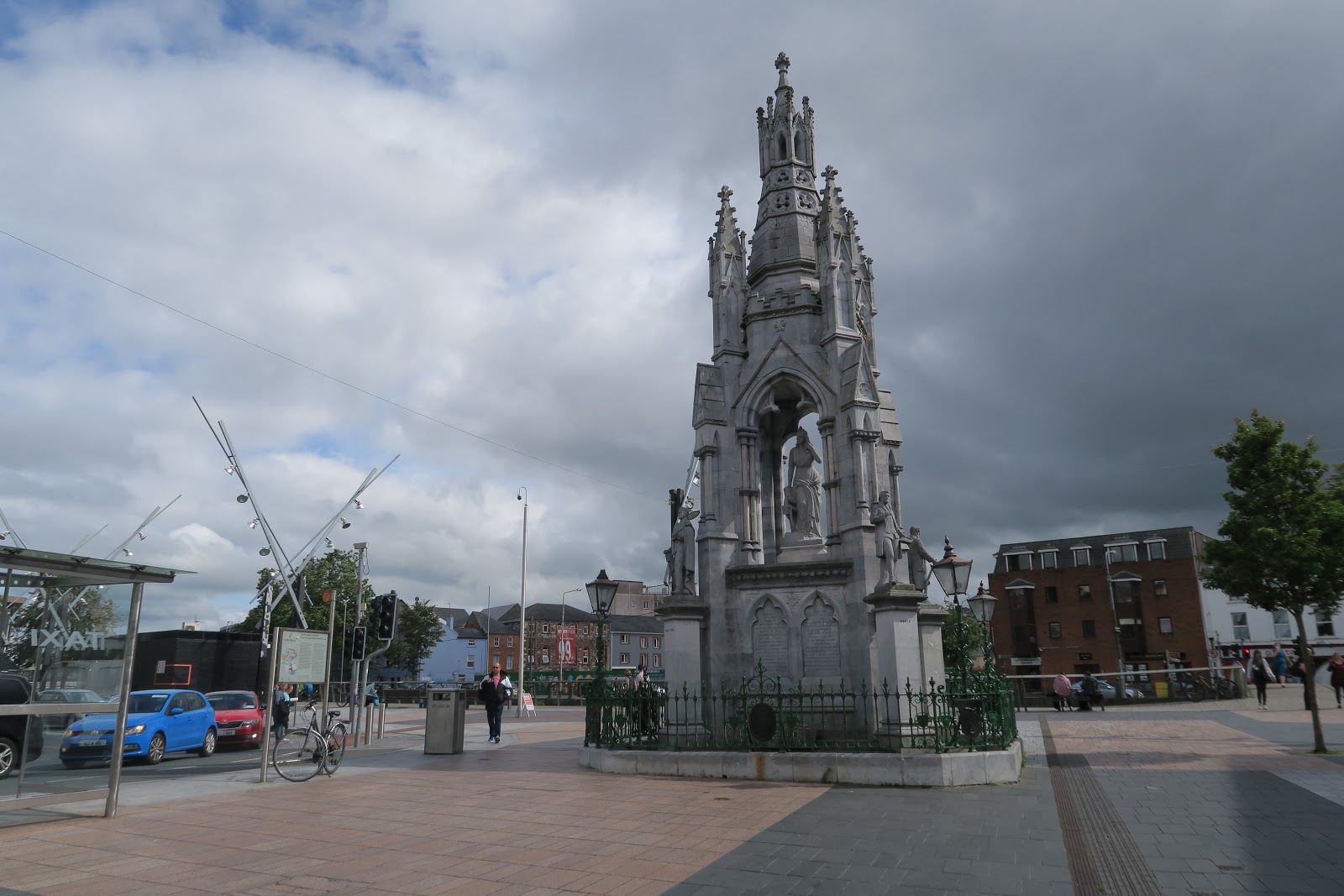
The city centre of Cork is actually set on an island which makes it incredibly easy to navigate.  It has a very liberal and youthful feel to it, and after the economic recession you can see where it is revitalizing itself with spruced-up streets and lots of snug pubs!

Cork has a long and bruising history, inextricably linked with Ireland’s struggle for nationhood.  The story begins in the 7th century, when St Fin Barre founded a monastery in the midst of a corcach (marshy place).  By the 12th century the settlement had become the chief city of the Kingdom of South Munster however, Irish rule was short-lived and by 1185 Cork was in the possession of the English.  It changed hands regularly during the relentless struggle between Irish and Crown forces.  It survived a Cromwellian assault only to fall to the merciless champion of Protestantism, William of Orange.  Cork prospered in the 18th century but a mere century later famine devastated both county and city, and robbed Cork of tens of thousands (and Ireland of millions) of its inhabitants by death or emigration.  The ’Rebel City’s’ deep-seated Irishness ensured that it played a key role in Ireland’s struggle for independence.  The Irish mayor was killed by the Black and Tans (British auxiliary troops) in 1920 and then his successor died in a London prison after a hunger strike.  To end that year, the Burning of Cork by British forces took place in 1920 during the Irish War of Independence.
Today Cork is a very young city - 40% of the population is under 25 and at just 11%, it has the lowest percentage of over 65s in Europe.

The best sight in Cork could really be the city itself - and you can soak it up as you wander the streets.
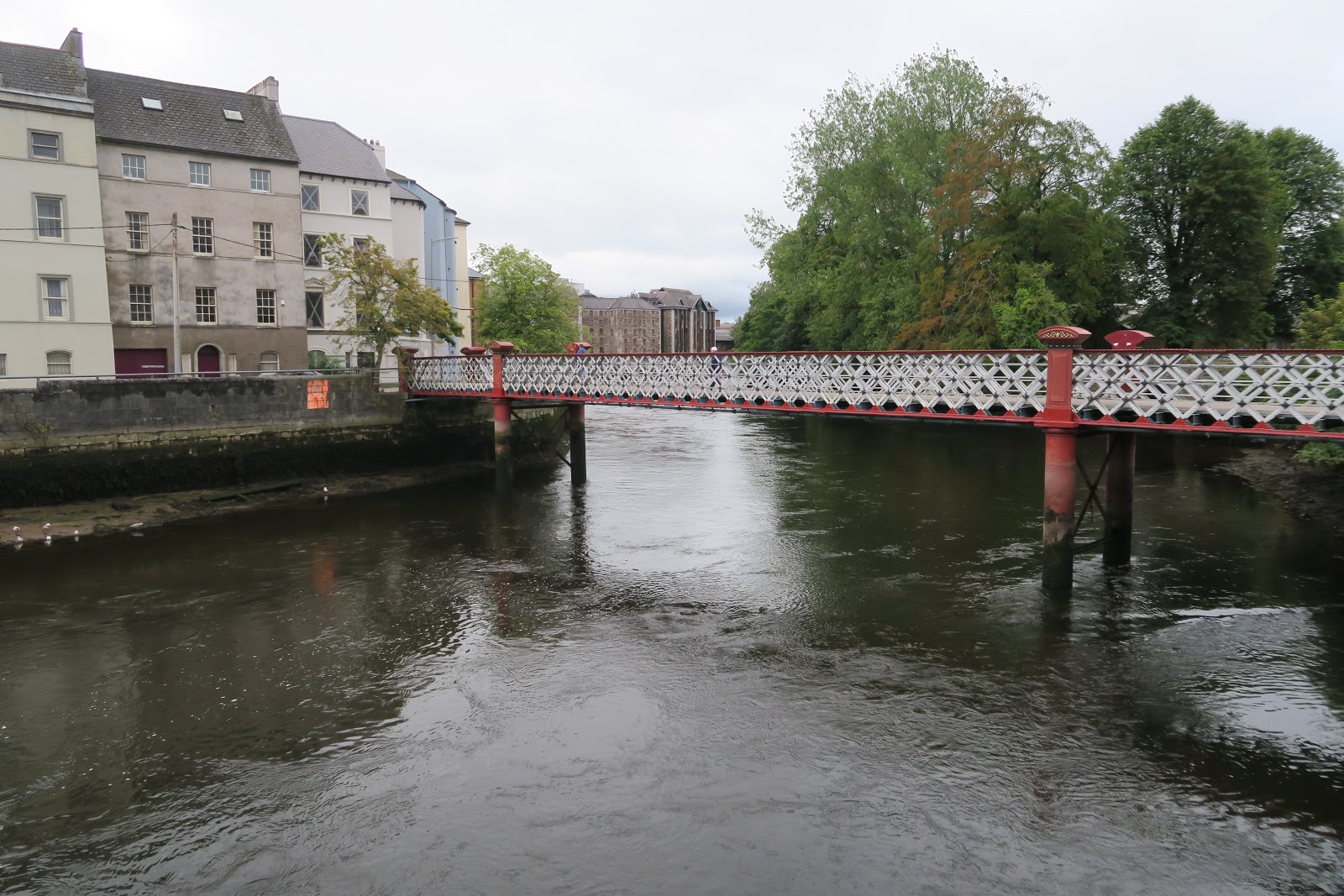
 The north and south channels of the River Lee both run through Cork, creating an island which is the city centre.



Patrick’s Hill, the county’s steepest hill at 23% gradient, is located pretty much smack-dab in the middle of the city


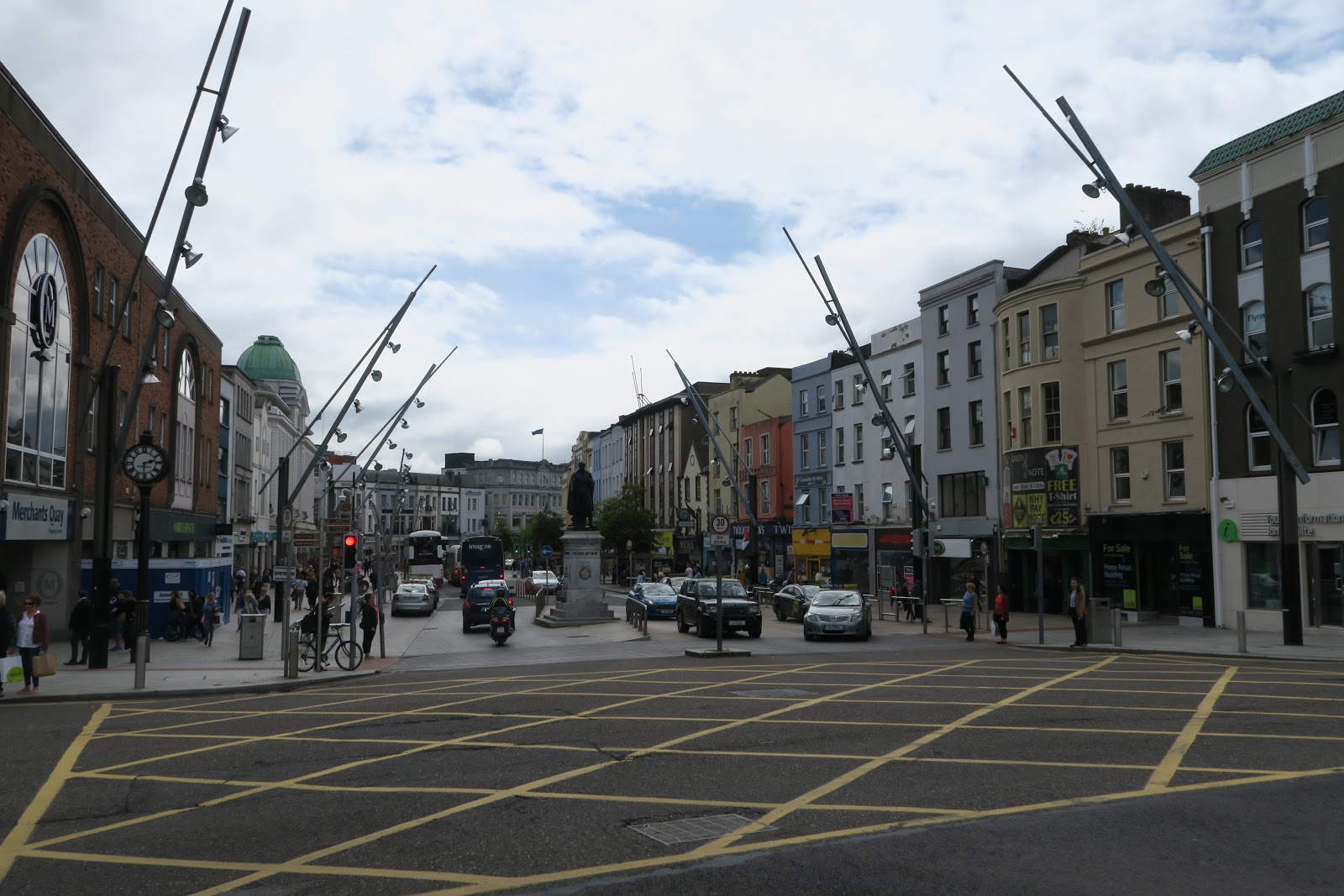
 St. Patrick’s Street - Cork’s main shopping street


 Cork City Hall is a very notable building made from limestone. This building, completed in 1936, replaced the previous one which was destroyed by the Black and Tans during the “Burning of Cork”.

The English Market.  This covered market traces its origins back to 1610, and the present building dates from 1786.


 That night I met a new friend, Pat - the brother-in-law of a friend of mine from home.  First I had a Guinness, then I had a Beamish, then...

Saturday, 18 January 2020

From Waterford to Cork, along the Copper Coast

The Copper Coast is a designated UNESCO area comprising a stretch of the southern coast of Ireland in County Waterford, extending roughly 50kms from Tramore in the east to Dungarvan in the west.  The coast is named for the historic metal-mining industry in the area.  This geologically diverse area contains records of Paleozoic volcanism and the last ice age.


Boatstrand Harbour


The historical Tankardstown Mine was established in 1824, closed in 1877, and the old buildings have become architectural relics of the village’s mining past.  Tankardstown is of particular interest for the diversity of minerals it has, some of which are rare.  There are at least 36 mined minerals recorded.


My day ended in Cork.  The red one is my B&B, with my little white baby car in front.


Hook Peninsula and Hook Head Lighthouse

Around every bend of the road on the Hook Peninsula is something different; a quiet beach, a crumbling fortress, a stately abbey and the world’s oldest working lighthouse standing tall at the peninsula’s tip.

Strongbow passed here on his way to capture Waterford in 1170, reputedly instructing his men to land ‘by Hook or by Crooke’ (the latter referring to the nearby settlement of Crooke) - the origin of the popular phrase.

Rather than backtracking along the main highway all the way to New Ross, I decided that my travels to Hook Peninsula would start with a ferry ride across the River Barrow, from Passage East over to Ballyhack on the peninsula.

Good-bye to East Passage

Across the River Barrow

To Ballyhack

The little white one at the end was my transportation for this part of my Ireland travels

South from Ballyhack is Duncannon which has a beautiful sandy beach.


On its southern tip, Hook Head is capped by the world’s oldest working lighthouse, a modern light flashing atop a 13th-century tower.  The tower was built by Strongbow’s son-in-law William Marshall, Earl of Pembroke, who had a 36m high tower built at the mouth of Waterford Harbour.  The exact year of construction of the current tower isn’t known, but Pembroke first came to the region in 1201 and the first map that shows the lighthouse serving its function is dated 1240, so construction must have taken place between these dates.

Hook Lighthouse is one of the most fascinating examples of medieval architecture in Ireland.  The tower stands four storeys high with walls up to 4m thick.  The old light-keepers cottages have now been turned into a visitor centre.


And the view from the top of the lighthouse is pretty spectacular!


Today you can clearly see where the River Barrow is emptying into the Irish Sea

 Looking north up the peninsula


A Welsh monk named Dubhan established a monastery on this site in the fifth century and the peninsula became known as Rinn Dubhain.  As dubhan also means ‘a hook’ this was later anglicized as Hook Head.  The medieval church dates to the thirteenth or fourteenth century and many interesting stone details still survive.


Dating from the 14th century, and rebuilt in the 1870s, Loftus Hall is reputed to be one of the most haunted houses in Ireland.  The first castle was built on the site in 1170 by the Norman Knight Raymond Les Gros who changed his surname to Redmond to adopt an Irish identity.  The Redmond family built the Hall in 1350 during the time of the Black Death to replace the castle.  It then became known as Redmond Hall and stayed in the Redmond family until the 1650s when it was given to the Loftus family who were English planters, as part of the Cromwellian conquest.  Redmond Hall then became Loftus Hall.  The building that exists today was heavily renovated between 1872 and 1879 in preparation for a visit from her majesty Queen Victoria.  Unfortunately the Queen’s visit never happened and the Loftus family was left with a massive debt following all of the work.

Loftus Hall stands alone and austere on the bleak landscape.  For many years it is said to have been visited by the Devil, so many people from the surrounding area are nervous to enter the place after dark.  The are some amazing ghost stories associated with Loftus Hall - far too many and too lengthy for me to write about here.  I guess you’ll just have to visit!


After the Norman Invasion of Ireland in 1169, Henry II granted large sections of land on the Hook Peninsula to The Knights Templar and they built the medieval tower at Templetown.  For how long the tower was in use is vague but in the early 19th century a new church was built alongside it and the tower adapted as a sacristy for the minister of the Church of Ireland. It remained in use until the mid 1800s and was then abandoned when the congregation moved to another church.  The ruins here today are a bit of a mish-mash.  There are only scant remains of the original Templar Church but the medieval tower is quite impressive.  The old 19th century church has all of its walls standing but is completely roofless. 


In addition to all these ‘destinations’ on Hook Peninsula, there is simply the gorgeous scenery as you’re driving along.


As I said - Irish weather, always unpredictable!

 On the way back to Waterford, leaving Ballyhack behind and crossing back over the River Barrow