Wednesday, 18 January 2017

Outside of Habana Vieja and the Malecon

Although I definitely did spend most of my time in Habana Vieja, I did take some time to check out a few other important sites in Havana, most noteworthy the Necropolic Cristobal Colon and Plaza de la Revolucion.

The Necropolic Cristobal Colon (Columbus Cemetery) covers 56 hectares and contains more than 500 major mausoleums, chapels, vaults, tombs, and galleries, in addition to countless gravestones embellished with all assortment of angels, griffins, cherubs, and other flamboyant ornamentation.
Today a national monument, the cemetery was laid out in 1871 in 16 rectangular blocks, divided by social status.  Nobles competed to build the most elaborate tombs, with social standing dictating the size and location of plots.


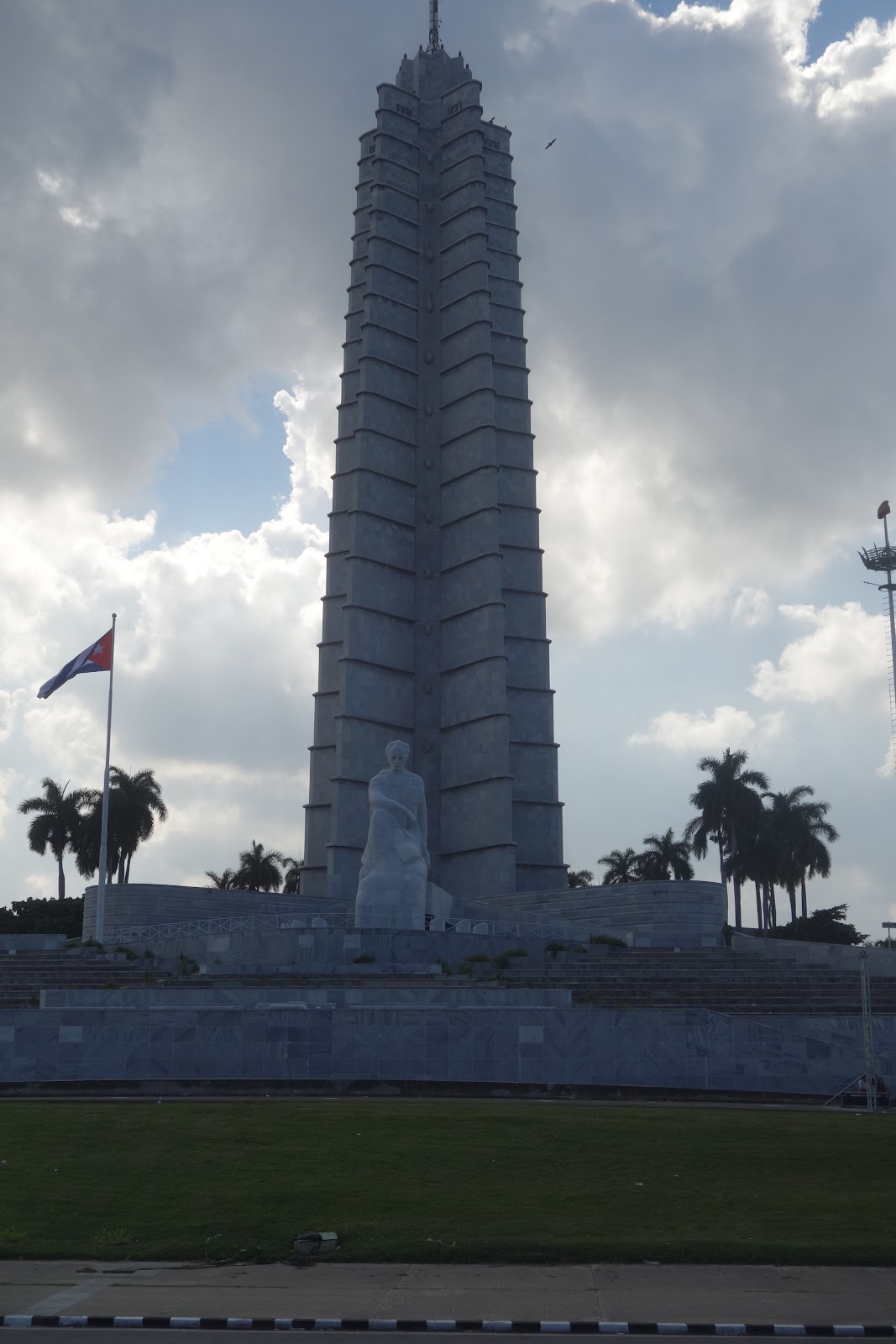
Havana's largest plaza, Plaza de la Revolucion (Revolution Plaza), spans 11 acres and was laid out during the Batista era.  It forms the administrative centre for Cuba with all the major buildings dating back to the 1950s.  Huge rallies are held here on May 1st (International Workers Day) as well as at other times.  The area is under close surveillance and loitering is discouraged.


The massive Memorial Jose Marti is on the south side of the square and sits atop a 30-metre tall base that is shaped as a five-pointed star.  It is made entirely of grey granite and marble and was completed in 1958.  To each side, stairways lead to a grey-white marble statue of national hero Jose Marti sitting in a contemplative pose, like Rodin's The Thinker.


This is the Ministerio del Interior (Ministry of the Interior, MININT, in charge of national security), built in 1953.  On one side, which is a windowless, horizontal block, there is a soaring "image" of Che Guevara and the words Hasta la victoria siempre ("Always towards victory").


A visage of Comandante Camilo Cienguegos is on the facade of the Ministry of Communications building.  It's accompanied by the words Vas bien, Fidel ("You're doing fine, Fidel").  Cienguegos's famous response was in reply to Fidel's question "Am I doing all right, Camilo?" at a rally in 1959.


The landmark Hotel Nacional is perched atop a cliff overlooking the Straits of Florida.  Now a national monument, this grande dame hotel was opened in 1930 in the midst of the Great Depression.


Officially known as Avenida Antonio Maceo, or more properly the Muro de Malecon ("embankment" or "seawall"), Havana's seafront boulevard "The Malecon" winds along the Atlantic shoreline.  What is now a six-lane road was originally designed as a jetty wall in 1857.  The Malecon is lined with once glorious houses, each very distinct from the next.  Unprotected by seaworthy paint since the Revolution, they have proven incapable of withstanding the salt spray that crashes over the seawall.  Most buildings are quite derelict and many have collapsed.


Along the shore are the worn remains of square baths hewn from the rocks below the seawall.  These Banos del Mar preceded construction of the Malecon.  Each is about four metres square and two metres deep, with rock steps for access and a couple of portholes through which the waves wash in and out.


The Malecon offers a microcosm of Havana life: the elderly walking their dogs; the shiftless selling cigars and cheap sex to tourists; the young passing beer and rum among friends; fishers tending their lines; and always, scores of people out walking.  The Malecon is known as "Havana's sofa" and acts, wrote Claudia Lightfoot, as "the city's drawing room, office, study, and often bedroom."  It is also a barometer\ of the political state of Havana.  During times of tension, the police presence is abnormally strong and the Malecon becomes eerily empty.

Walking along The Malecon, looking west across Bahia de la Habana (Havana Bay)

Havana Harbour

Havana Harbour is the port of Havana and it is the main port in Cuba, not including Guantanamo Bay Naval Base.  Most vessels coming to Cuba make port in Havana.  The harbour was created from the natural Havana Bay which is entered through a narrow inlet and which then divides into three main harbours.
For me it wasn't really the 'prettiest' place in Habana Vieja to hang out, but then again, any time I can be near water that's always a good thing, and I certain did enjoy checking out the various ships that were in port.


Overlooking the Harbourfront is the Fuente de Neptuno (Neptune Fountain) erected in 1838.


On the other side of the harbour is Havana's 20 metre marble statue of Christ, erected in 1958, which blesses the city, much like the famous Cristo Redentor in Rio de Janeiro.


Tuesday, 17 January 2017

Various spectacular buildings

In addition to the four major Plazas in Habana Vieja there are also some other spectacular old buildings that are also, thankfully, part of the restoration work that is happening.

The Edificio Bacardi (Bacardi Building), the former headquarters of the Bacardi rum empire, is a stunning exemplar of art deco design.  It was designed by a Cuban architect and the building was completed in 1929.  At the very top is a brass-winged bat - the famous Bacardi motif.


Hotel Inglaterra opened in 1856 and is now the oldest Cuban hotel still in existence.  To this day much of the social action in Habana Vieja happens on the sidewalk in front of the hotel.


The statuesque Capitolio Nacional dominates Havana's skyline.  It was built between 1926 and 1929 as Cuba's Chamber of Representatives and Senate and designed after Washington's Congress building.  The lofty stone cupola rises 62 metres, topped by a replica of the Italy's famous 16th-century bronze Mercury sculpted by Giambologna.  Disappointing that I couldn't get into the building - but happy that restoration work is finally happening!


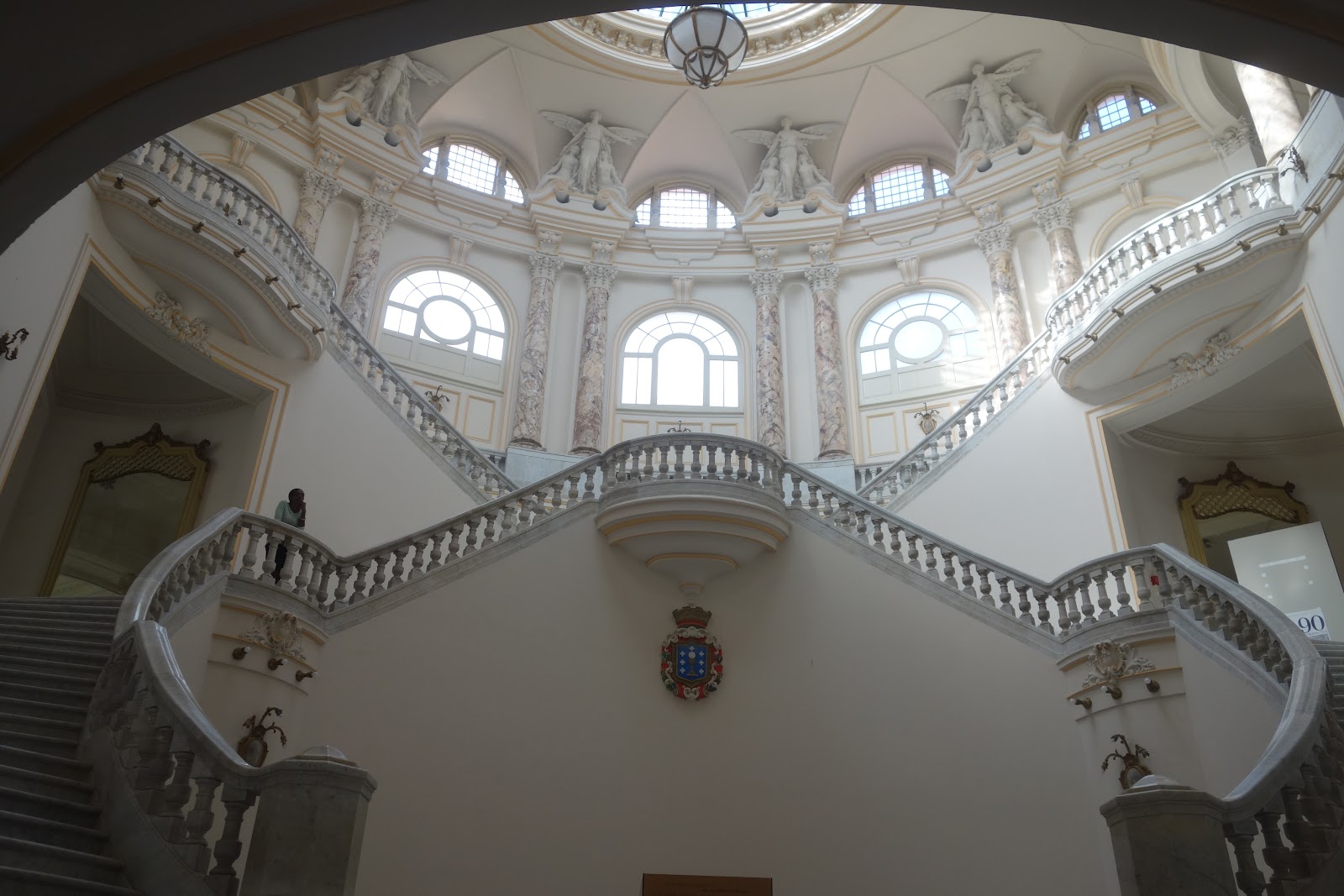
This ornate building is the Museo de la Revolucion (Museum of the Revolution).  Building started in 1913 to house the provincial government, but before it was finished it was earmarked as the Palacio Presidencial (Presidential Palace) and Tiffany's of New York was entrusted with its interior decoration.  Following the Revolution, the three-storey palace was converted into the museum.


In front of the museum (behind the people) is a SAU-100 Stalin tank used during the Bay of Pigs invasion in 1961

Hands down my most favourite building, and I think the most spectacular, is the Gran Teatro de la Habana (Grand Theatre of Havana).  The original theatre was built in 1837, and then in 1915 the current neo-baroque structure was built around the original Teatro.  Currently it functions as a theatre for the Ballet Nacional and Opera Nacional de Cuba.


Before performances and during intermissions, musicians can play from the top of this 'pedastal' in the lobby

The exquisitely decorated 2000 seat main theatre features a painted dome and huge chandelier.


The obligatory photo to prove I really was there


And a few other, various buildings that make up the streetscape of Habana Vieja.


La Bodeguita del Medio - a neighbourhood hangout with its most famous graffiti being credited to Hemingway.  "Mi mojito en La Bodeguita, mi daiquiri en El Floridita", he supposedly scrawled on the walls.  

The famous restaurant and bar, El Floridita has been serving food since 1819 and is haunted by Hemingway's ghost.  Hemingway used to write and drink daiquiris here, and he immortalized both the drink and the venue in his novel Islands in the Stream.

An elementary school

 
This is a massive former seminary established in 1721 and is now a cultural centre
 

This 19th-century neo-classical building housed the Camara de Representantes (Chamber of Representatives) during the early republic.

The beautiful, gleaming white Sacra Catedral Ortodoxa Rusa (Russian Orthodox Cathedral) whisks yo allegorically to Moscow with its bulbous, golden minarets.  A gold altar and chandeliers hang above grey marble floors.